Afoni Children of Hope Foundation
ACOHOF - Cameroon
Motto: Hope for the Underprivileged
Afoni Children of Hope Foundation
ACOHOF - Cameroon
Motto: Hope for the Underprivileged
Health, Rare Diseases, Muscular Dystrophy & Disability Inclusion Program
Restoring Hope. Advancing Inclusion. Transforming Lives
OVERVIEW
Across Cameroon, many children living with rare diseases, Muscular Dystrophy, and disability-related barriers face a long, costly, and often isolating journey from early symptoms to diagnosis, care, rehabilitation, education, and community acceptance.
This program shortens that journey by connecting families to reliable information, practical support, inclusive education, advocacy, and pathways to care so affected children are seen, supported, and included.The Afoni Children of Hope Foundation (ACOHOF), founded in 2008 and later legalized by the Government of Cameroon, developed this work from a deeply personal family experience into a broader response for children and caregivers affected by rare disease, Muscular Dystrophy, and disability-related exclusion.
MDA Cameroon operates as a focused platform under ACOHOF, bringing together families, caregivers, affected persons, volunteers, and partners to advance awareness, assistive support, inclusive education, advocacy, and dignity for affected children.
Born Out of a Mother’s Love: Fabrice’s Story
The program’s history is rooted in the journey of Kisife Fabrice, a young boy diagnosed with Duchenne Muscular Dystrophy, and in the determination of his mother, Mrs. Ngalim Kisife Brunhilda, to seek understanding, support, and solutions rather than allow fear or stigma to define his future.
Fabrice was born healthy and grew like other children, but early childhood brought signs his family could not ignore: frequent falls, difficulty running, trouble climbing stairs, and the need to push on his legs to stand from the floor.
As his mobility declined, Fabrice remained bright, eager to learn, and determined to belong—showing that a diagnosis should never erase a child’s dignity, ability, or hope.
His mother, Mrs. Ngalim Kisife Brunhilda, responded not with resignation but with action—seeking information, connecting with others, and building support around her son’s needs.
Her brother, Justin, helped connect the family with online communities and other families facing similar conditions. That support reinforced a lesson that now guides the program: families affected by rare diseases need timely information, peer connection, practical assistance, and organized advocacy.
That realization inspired ACOHOF’s commitment to children living with Muscular Dystrophy and other rare genetic conditions, and later strengthened MDA Cameroon as a dedicated platform for raising awareness, providing family support, and promoting inclusion.
Why Fabrice’s story matters: it transformed one family’s search for answers into a wider movement for dignity, early diagnosis, family support, and social acceptance for children living with rare diseases and disabilities in Cameroon.
The Wider Need in Cameroon
Rare diseases are individually uncommon but collectively significant, affecting millions of people worldwide and often beginning in childhood. For many families, the greatest challenge is not only the condition itself but the lack of timely diagnosis, information, rehabilitation, assistive support, and social inclusion.
In Cameroon and other low-resource settings, rare and genetic conditions are often underdiagnosed, misunderstood, or addressed too late, leaving families to navigate complex medical, social, educational, and financial challenges with limited support.
Duchenne Muscular Dystrophy is a severe childhood form of Muscular Dystrophy linked to mutations in dystrophin, a protein that helps protect and strengthen muscles. As the condition progresses, it can affect movement, breathing, and heart function.
Families may also face emotional stress, financial pressure, transport costs, inaccessible services, and social isolation as parents become caregivers while searching for treatment, rehabilitation, assistive devices, and inclusive schooling.
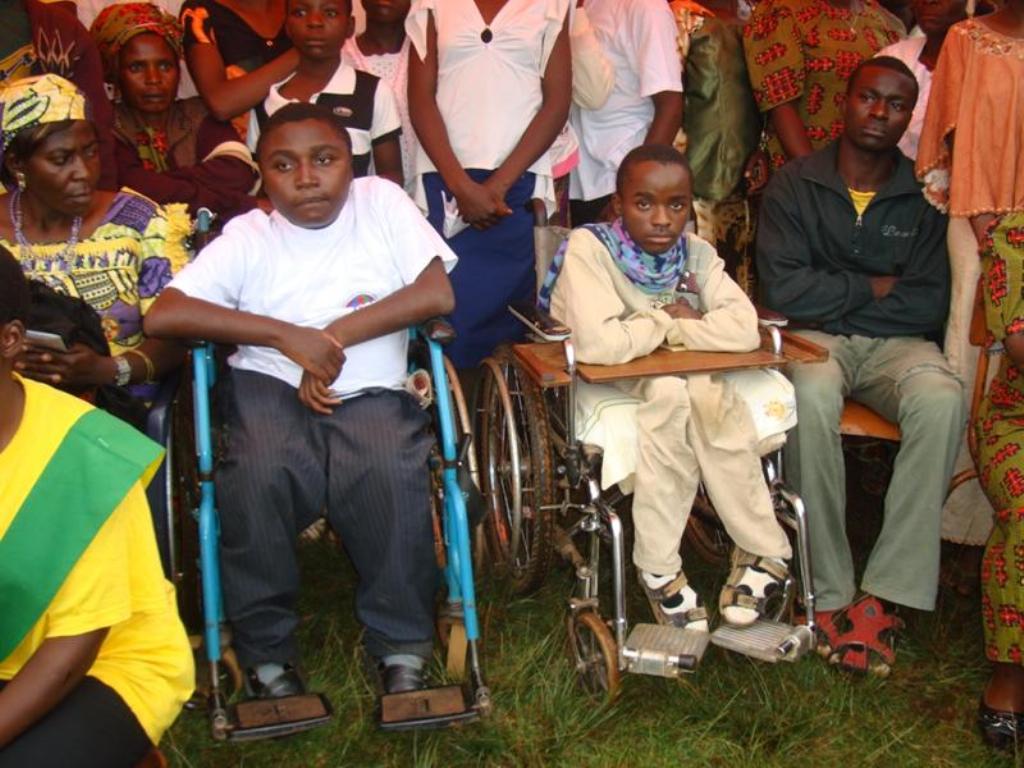
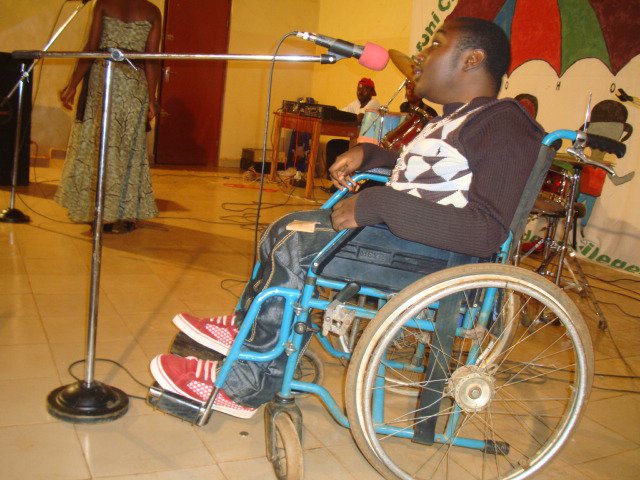
Misconceptions about genetic conditions, inaccessible schools, lack of assistive technology, and discrimination can prevent children from participating fully in family, school, community, and public life.
ACOHOF’s response is grounded in a simple belief: disability is not inability. With timely diagnosis, coordinated care, rehabilitation, inclusive education, assistive technology, and community support, children can live meaningful and dignified lives.
Understanding Muscular Dystrophy and Why Early Support Matters
Muscular Dystrophy refers to a group of genetic disorders that cause progressive muscle weakness. In Duchenne Muscular Dystrophy, lack of functional dystrophin makes muscle cells more vulnerable to damage, leading to gradual loss of strength and mobility.
Although there is currently no universal cure, coordinated care—including physiotherapy, cardiac monitoring, respiratory support, clinical follow-up, and family education—can improve quality of life and help children participate more safely in daily life.
ACOHOF and MDA Cameroon’s Integrated Response
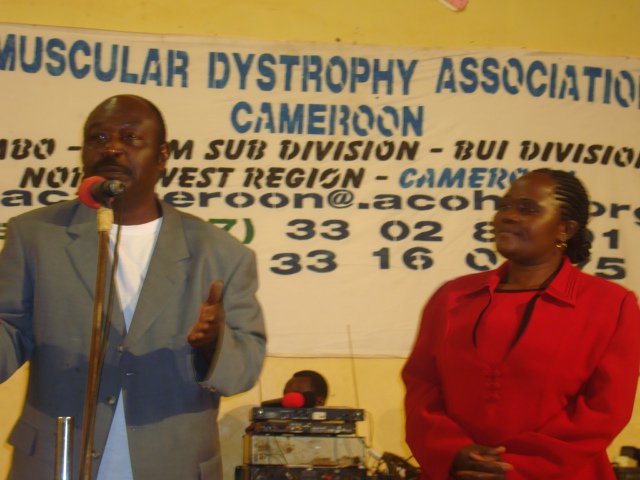
MDA Cameroon is a focused platform formed under ACOHOF to give special attention to Muscular Dystrophy and other rare diseases. ACOHOF provides the broader organizational foundation, while MDA Cameroon mobilizes families, caregivers, volunteers, and partners to raise awareness, provide referral support, deliver education, support mobility, empower families, and advance advocacy.
The program is organized around six integrated pillars:
1. Awareness and Early Diagnosis: Community education reduces stigma, challenges misconceptions about genetic conditions, and encourages early identification and referral.
2. Healthcare and Rehabilitation: Families are supported to access medical consultation, physiotherapy, respiratory care, cardiac monitoring, rehabilitation, and follow-up where services are available.
3. Assistive Devices and Accessibility: The program helps families obtain wheelchairs, mobility aids, postural support, adaptive equipment, and practical tools that improve independence and safety.
4. Inclusive Education: ACOHOF and MDA Cameroon work with schools, teachers, and families so children can remain in school and participate with dignity.
5. Family Support and Empowerment: Caregivers receive information, psychosocial support, peer connection, and practical encouragement so they are not left to face rare disease alone.
6. Advocacy and Rights Protection: The program promotes disability rights, inclusive policies, equal opportunities, and community acceptance.
5. Expected Impact
With sustained support, this program can help children and families move from isolation to coordinated care, from stigma to acceptance, and from preventable exclusion to participation in school and community life.
· More families receive reliable information, referral guidance, and peer support.
· Children gain improved access to rehabilitation, mobility support, inclusive education, and practical assistance.
· Caregivers are better equipped to manage daily care, advocate for services, and reduce isolation.
· Schools and communities become more aware of rare diseases, disability rights, and inclusion.
· Partners have a clear pathway to contribute medical expertise, assistive devices, funding, training, advocacy, or community outreach.
Hope Through Science and Partnerships
Scientific progress is expanding knowledge and treatment options for Muscular Dystrophy and other rare diseases, including improved diagnosis, multidisciplinary care, gene-based therapies, exon-skipping medicines, and approaches that protect heart and respiratory function.
For families in Cameroon, these advances create hope while highlighting a practical challenge: knowledge, diagnosis, rehabilitation, assistive technology, and coordinated care must be brought closer to communities that need them most.
Vision for Inclusion
We envision a Cameroon where every child living with a rare disease or disability can access quality healthcare, rehabilitation, inclusive education, assistive technology, family support, and equal opportunities to live with dignity and reach their full potential.
8. Partnership Opportunities
Fabrice’s journey shows that no family should face rare disease alone. ACOHOF and MDA Cameroon seek practical partnerships that connect families to medical, educational, social, and material support.
Medical and Rehabilitation Partners
Hospitals, clinics, physiotherapists, rehabilitation centres, respiratory care providers, and cardiac specialists can help improve diagnosis, monitoring, treatment guidance, and long-term care for children living with Muscular Dystrophy and related conditions.
Education and Inclusion Partners
Schools, teachers, parent groups, inclusive education advocates, and disability organizations can help children like Fabrice remain in school, participate safely, and be recognized for their abilities rather than defined by their condition.
Donors, Philanthropic Partners, and Community Supporters
Financial contributors, corporate partners, faith communities, diaspora supporters, and local volunteers can provide wheelchairs, assistive devices, nutrition support, transport assistance, family relief, awareness campaigns, and emergency care support.
Research, Advocacy, and Development Partners
Universities, researchers, rare disease networks, government institutions, UN agencies, and development organizations can support data collection, policy advocacy, caregiver training, public awareness, and stronger referral pathways across Cameroon.
9. Call to Action: Help Turn One Story into Many Futures
Fabrice’s story began with one family searching for answers. It now calls partners, donors, professionals, schools, communities, and institutions to help build a stronger system of care and inclusion for children living with rare diseases and disabilities.
Support can take many practical forms: funding medical referrals and rehabilitation, donating wheelchairs and assistive devices, sponsoring inclusive education, supporting caregiver training, providing transport or nutrition assistance, volunteering professional expertise, or partnering on awareness and advocacy campaigns.
We invite you to donate, partner, volunteer, advocate, or connect ACOHOF and MDA Cameroon with institutions that can expand diagnosis, care, rehabilitation, education, and inclusion for children like Fabrice.
Every contribution helps move a child from isolation to support, from stigma to dignity, and from uncertainty to hope.
Because inclusion is not charity—it is justice, opportunity, and shared responsibility.
Appendix: Muscular Dystrophy Awareness Flyer Content
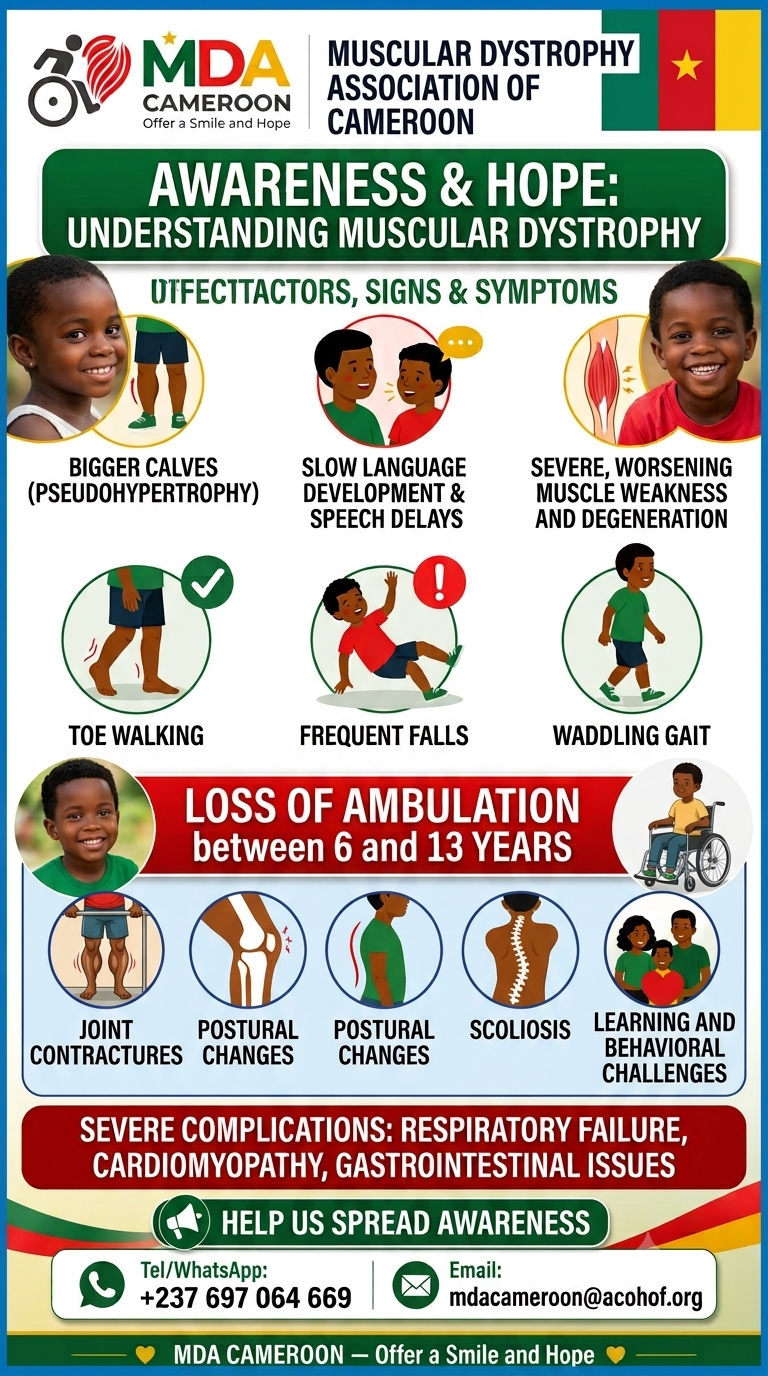
Muscular Dystrophy (MD) is a group of genetic conditions that cause progressive muscle weakness and loss of muscle mass. In Cameroon, early recognition and prompt medical care are essential to help affected children manage symptoms, slow progression, and protect quality of life—especially for boys, who are most commonly affected by Duchenne Muscular Dystrophy (DMD).
Recognize the Signs: What to Look For in a Young Child
MD symptoms often begin in early childhood and gradually worsen over time. Below are common signs parents and caregivers may notice.
Developmental and functional delays
• Delayed walking: Children may start walking later than expected.
• Difficulty running and climbing stairs: Weakening muscles make these tasks harder.
• Frequent falls: Muscle weakness and balance difficulties may lead to falls.
• Slow speech/language development: Some children may show delays in speech and language.
Movement patterns and physical signs
• Enlarged calves: Calves may look bigger due to fat and connective tissue replacing muscle.
• Waddling gait: Weak pelvic muscles can cause a sideways “waddle” when walking.
• Toe walking: Walking on the balls of the feet may occur due to tight Achilles tendons and contractures.
• Postural changes: As supporting muscles weaken, posture may gradually shift.
• Gowers’ sign: When standing from the floor, the child may use their hands to “climb” up their legs, often indicating significant lower-limb weakness.
Progression: What Families May See Over Time
MD is progressive. As children grow, weakness typically becomes more widespread.
Common stage in Duchenne Muscular Dystrophy
• Early loss of walking ability: Muscle degeneration can progress to the point where a wheelchair becomes necessary for mobility.
Additional physical, medical, and learning challenges
• Joint contractures: Tight muscles can cause fixed, painful joints.
• Scoliosis: Weak trunk or spinal muscles can lead to curvature of the spine, sometimes requiring bracing or surgery.
• Learning and behavioral challenges: Some children may develop difficulties related to school and behavior.
Severe Medical Complications in Advanced Stages
As MD advances, it can affect vital body systems:
• Cardiomyopathy: The heart is also a muscle and may weaken, requiring ongoing monitoring with a cardiologist.
• Respiratory failure: Breathing muscles can weaken, increasing the risk of breathing difficulty, chest infections, and potentially life-threatening complications without timely care.
• Gastrointestinal issues: Swallowing difficulties and constipation can occur as the condition progresses.
Seek Help Early: The Role of MDA Cameroon
Early assessment and care can help families plan, manage complications, and support the child’s wellbeing.
Contact MDA Cameroon for support, clinical guidance, and referral:
• Tel/WhatsApp: +237 697 064 669
• Email: mdacameroon@acohof.org
• Website: https://acohof.org/mda-cameroon/
Join us in raising awareness and offering hope. Let’s make a difference together.