Afoni Children of Hope Foundation
ACOHOF - Cameroon
Motto: Hope for the Underprivileged
Afoni Children of Hope Foundation
ACOHOF - Cameroon
Motto: Hope for the Underprivileged
ACOHOF Family Farm School of Tatum
Status: Closed following the escalation of the armed conflict in Cameroon’s North West Region
Historical Status
The ACOHOF Family Farm School of Tatum was established by the Afoni Children of Hope Foundation (ACOHOF) in Tatum, Bui Division, North West Region, Cameroon, in 2014, in partnership with DISOP Cameroon / IECD.
The school was created to provide rural young people with practical, relevant and locally grounded education combining agriculture, vocational skills, entrepreneurship, family participation and community-based learning.
Following the escalation of the armed conflict in Cameroon's North West Region, insecurity made it impossible for ACOHOF to continue normal school operations in Tatum. The school was subsequently closed when insecurity made continued operations impossible.
Today, the Tatum school remains an important part of ACOHOF's institutional history and educational legacy.
Origins and Purpose
The Tatum Family Farm School was established in response to persistent challenges affecting rural young people and families, including poverty, limited access to practical education, few employment and self-employment opportunities, low agricultural productivity, rural-to-urban migration and increased vulnerability to exploitation.
ACOHOF sought to create an educational model that would help young people acquire useful skills without becoming disconnected from their families and communities.
The school therefore combined education with agriculture, entrepreneurship, practical work, family participation and community development.
Its purpose was not only to prepare learners for examinations or formal employment, but also to equip them with the knowledge, confidence and practical capacity needed to create livelihoods, improve household wellbeing and contribute to sustainable rural development.
Educational Model: Pedagogy of Alternation
A defining feature of the Tatum Family Farm School was the Pedagogy of Alternation, an educational approach that linked structured learning at school with supervised practical learning in the learner's family, farm, enterprise and community environment.
The same approach was also expressed through appellations such as work-based learning, practical periods, home practicals, family-based learning and community-based assignments.
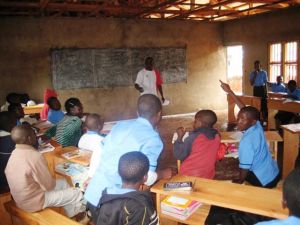
Under this model, trainees alternated between classroom instruction and periods of practical application. Learners were expected to apply what they had studied through agricultural production, family projects, entrepreneurial activities and community-based assignments.
Parents and guardians were active partners in the learning process, while trainers and teachers provided technical guidance, follow-up visits and assessment.
The objective was to ensure that education remained closely connected to the realities of rural life and productive livelihoods.
Practical Agricultural Training: Learning by Doing
Practical training was central to the educational philosophy of the ACOHOF Family Farm School of Tatum.
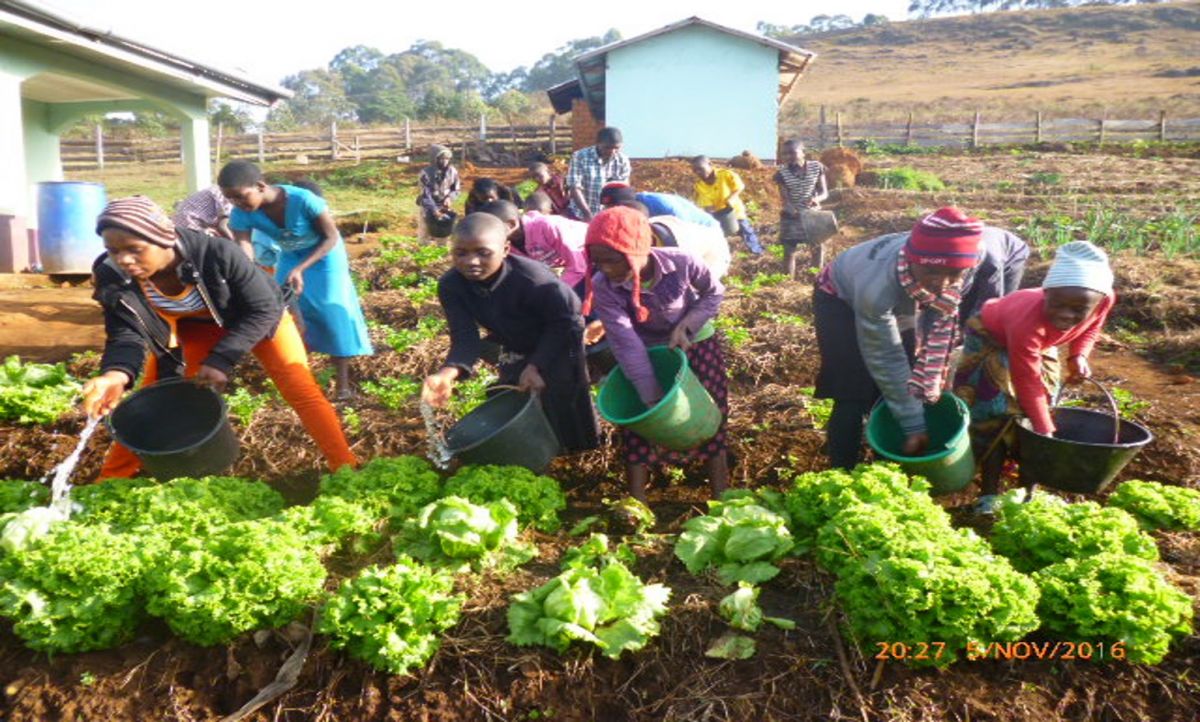
Trainees were not expected merely to study agriculture in theory. They learned through direct participation in crop production, livestock activities, farm management and other practical livelihood activities.
The school used practical production activities to help learners connect classroom knowledge with real agricultural work. Through these experiences, trainees developed technical skills, responsibility, problem-solving ability and a stronger understanding of agriculture as a viable livelihood and enterprise.
A key principle of the Family Farm School model was that technical knowledge becomes more meaningful when learners apply it through productive work.
The Tatum School Piggery
One important practical training facility at the Tatum Family Farm School was the school piggery, developed within the DISOP Cameroon / IECD partnership framework.
The piggery provided trainees with hands-on experience in:
Animal husbandry;
Feeding and nutrition;
Hygiene and sanitation;
Disease prevention;
Recordkeeping;
Farm management; and
Agricultural entrepreneurship.
The facility enabled learners to apply theoretical knowledge in a productive setting and reinforced the school's emphasis on work-based learning, practical periods and learning by doing.
The piggery and other practical training facilities were eventually abandoned when insecurity forced ACOHOF to suspend school operations in Tatum.
Educational Standards of the ACOHOF Family Farm School of Tatum
The ACOHOF Family Farm School of Tatum was committed to providing quality, relevant and practical education adapted to the realities of rural young people and communities.
Its educational standards emphasized:
A comprehensive and locally relevant curriculum;
Qualified, experienced and committed trainers;
The Pedagogy of Alternation;
Work-based and experiential learning;
Practical agricultural and vocational training;
Family and community participation;
Entrepreneurship and self-employment;
Integral youth formation and responsible citizenship;
Sustainable agriculture and rural development; and
A safe, supportive and disciplined learning environment.
These standards reflected ACOHOF's belief that rural education should prepare young people not only for examinations, but also for productive livelihoods, entrepreneurship and responsible participation in family and community life.
Strategic Partnerships That Strengthened the Tatum School
The development of the ACOHOF Family Farm School of Tatum was strengthened through strategic partnerships that brought together local knowledge, educational expertise, technical support and international cooperation.
DISOP Cameroon / IECD contributed to the development and strengthening of the Family Farm School model, including the Pedagogy of Alternation, practical agricultural training and the integration of classroom learning with family- and community-based application.
Engineers Without Borders Sweden (EWB Sweden) worked with ACOHOF from 2015 on infrastructure and community-development initiatives in Tatum. The partnership supported renewable energy, digital learning, water and community-health interventions.
These partnerships helped the Tatum school develop into more than a conventional classroom-based institution. It became a practical rural learning environment integrating education, agriculture, entrepreneurship, technology, renewable energy, water, community health and sustainable rural development.
Renewable Energy and Digital Learning
Reliable electricity was a major challenge in Tatum and limited access to modern educational tools.
Through its partnership with Engineers Without Borders Sweden, ACOHOF introduced solar electricity at the Family Farm School of Tatum.
The solar installation supported the use of computers and educational equipment, improved the learning environment and helped extend productive study and working hours.
A computer laboratory developed through the partnership further strengthened access to digital learning and provided students and trainers with opportunities to use information and communication technologies as part of their educational experience.
These investments demonstrated ACOHOF's commitment to combining practical rural education with appropriate technology and renewable energy.
Water, Health and Community Resilience
The Tatum Family Farm School also served as a platform for wider community-development initiatives.
ACOHOF and its partners recognized that education, health, water, sanitation, energy and livelihoods are closely interconnected in rural communities.
Working with Engineers Without Borders Sweden, ACOHOF participated in water-disinfection initiatives, including Solar Water Disinfection (SODIS) and WADIS, while exploring longer-term solutions to improve access to safe water.
The later Waccess initiative focused on identifying sustainable water-access solutions for students, staff and members of the wider Tatum community.
These interventions reflected ACOHOF's integrated approach to rural development: improving education also requires addressing the environmental, health and infrastructure challenges that affect learners, families and communities.
Historical School Profile – 2016/2017 Academic Year
The figures below document the size and composition of the ACOHOF Family Farm School of Tatum during the 2016/2017 academic year, before school operations were later disrupted by the armed conflict.
Total students: 87
Boys: 53
Girls: 34
Girls as a proportion of enrolment: 39.01%
Full-time trainers: 5
Auxiliary staff: 3
These figures provide an important historical record of the school's operational capacity and the number of young people benefiting from the Family Farm School model before the conflict.
Family and Community Participation
The Family Farm School model regarded the family and community as active partners in education.
Parents and guardians were not simply responsible for sending their children to school. They participated in the educational process by supporting learners during practical periods, supervising assigned activities and helping connect school-based knowledge with household and community realities.
During work-based learning, practical periods, home practicals, family-based learning and community-based assignments, learners were expected to apply what they had learned through productive activities within their families, farms and communities.
Trainers and teachers provided technical guidance, conducted follow-up visits and assessed learners' practical work.
This partnership between the school, learner, family and community helped ensure that education remained relevant to household livelihoods and local development.
What the Armed Conflict Interrupted
By the time insecurity forced ACOHOF to suspend activities in Tatum, the Family Farm School had developed into a functioning rural education and community-development environment.
Years of investment had contributed to:
Agricultural and livestock training;
The Pedagogy of Alternation and work-based learning;
Practical production facilities, including the school piggery;
Trained teaching and support staff;
Solar electricity;
Computer-assisted learning;
Water and community-health initiatives;
Family and community participation; and
Partnerships with national and international organizations.
The closure of the school therefore represented more than the loss of classroom activities. It interrupted years of investment in young people, staff capacity, practical training infrastructure, community services and sustainable rural development.
The experience also demonstrated the vulnerability of grassroots educational and development initiatives operating in conflict-affected communities.
The Tatum Legacy
Although the ACOHOF Family Farm School of Tatum is no longer operational, its legacy remains central to ACOHOF.
Tatum was the birthplace of ACOHOF's Family Farm School experience. It helped the organization develop practical expertise in:
Rural vocational and agricultural education;
The Pedagogy of Alternation;
Work-based learning and practical periods;
Family and community participation;
Agricultural entrepreneurship;
Practical production and livestock training;
Renewable energy and digital learning;
Water and community-health initiatives; and
Partnership-based rural development.
The knowledge, experience and institutional lessons developed in Tatum continue to influence ACOHOF's educational and community-development work.
The Tatum experience later informed ACOHOF's continued Family Farm School work in Bankim, Adamawa Region, while also strengthening the organization's broader capacity in vocational education, agriculture, entrepreneurship and community development.
The Tatum school therefore remains important not simply as a school that closed, but as the foundation of an educational and rural-development experience that ACOHOF continues to build upon today.
Preserving the History of the Tatum School
The photographs, videos, historical enrolment records, partnership documentation and project materials presented on this page preserve the story of the ACOHOF Family Farm School of Tatum and the young people, families, trainers, communities and partners who contributed to its development.
They also provide evidence of ACOHOF's longstanding experience in practical education, agriculture, community development, infrastructure and partnership implementation before the disruption caused by the armed conflict.
ACOHOF remains committed to preserving this institutional history while applying the lessons learned from Tatum to its continuing work with vulnerable children, young people, families and communities.
Vision of the ACOHOF Family Farm School of Tatum
To develop a generation of well-trained rural young women and men equipped with practical, entrepreneurial and life skills to contribute to sustainable rural development, resilient families and productive communities.
Mission of the ACOHOF Family Farm School of Tatum
To work in partnership with parents, families, community members, professionals, local authorities, government institutions and development partners to provide rural young people with relevant education, practical agricultural training, vocational and entrepreneurial skills, work-based learning opportunities and the values needed for self-reliance, responsible citizenship and sustainable livelihoods.
Why the Family Farm School Model Was Needed in Tatum
The Tatum Family Farm School responded to challenges facing rural young people, including limited access to practical education, few employment and self-employment opportunities, low agricultural productivity, rural-to-urban migration, negative perceptions of farming, and increased vulnerability to exploitation.
ACOHOF sought to demonstrate that agriculture and rural life could offer viable pathways to dignity, enterprise and self-reliance when young people had access to relevant education, practical skills and family support.
Main Training Areas
Training at the Tatum Family Farm School combined practical agriculture with broader vocational, entrepreneurial and life-skills development.
Key areas included:
Crop production;
Livestock production;
Farm management;
Agricultural entrepreneurship;
Recordkeeping and basic business skills;
Environmental stewardship;
Food security and household livelihoods;
Work-based learning and practical assignments;
Community participation; and
Personal responsibility and leadership.
Learners and Communities Served
The school primarily served rural young people from Tatum and surrounding communities, including learners from economically disadvantaged families and those with limited access to conventional education or livelihood opportunities.
The Family Farm School model was designed to keep learning closely connected to the learner's family and community environment, so that knowledge acquired at school could generate benefits beyond the individual student.
Safeguarding and Protection Focus
ACOHOF's work with rural youth was also shaped by concerns about child trafficking, exploitative labour, early marriage, migration and other risks affecting vulnerable young people.
By providing locally relevant education, practical skills and livelihood pathways, the Tatum Family Farm School sought to reduce these vulnerabilities and strengthen the ability of young people to build productive futures within their communities.
Historical Achievements and Evidence of Impact
Before its closure, the Tatum Family Farm School had developed a functioning practical education environment that included trained staff, active enrolment, agricultural production, livestock training, a school piggery, solar electricity, computer-assisted learning, family participation and community-focused water initiatives.
Historical records from the 2016/2017 academic year show an enrolment of 87 students, supported by five full-time trainers and three auxiliary staff.
These achievements demonstrate that the school had moved beyond the planning stage and was operating as an established rural education and community-development institution.
Partner Recognition
ACOHOF acknowledges the contributions of partners who supported the development of the Tatum Family Farm School and its surrounding community-development initiatives.
These include DISOP Cameroon / IECD, Engineers Without Borders Sweden, local authorities, families, trainers, community members and other collaborators who contributed technical, educational, infrastructure and institutional support.
Their contributions form an important part of the historical legacy of the Tatum school.
Closure and Loss of Infrastructure
The closure of the Tatum school following the armed conflict resulted in the interruption and abandonment of educational activities, practical production units and infrastructure that had been developed through years of investment by ACOHOF and its partners.
The impact therefore extended beyond the suspension of classes. It affected learners, staff, families, agricultural facilities, technology investments, community projects and the wider rural-development ecosystem surrounding the school.
Related ACOHOF Education Today
The experience gained in Tatum continues to inform ACOHOF's educational work in Bankim.
Today, ACOHOF operates the ACOHOF Family Farm School of Bankim and the ACOHOF Bilingual Technical Vocational College of Agriculture and Entrepreneurship (ATVOCAE) as two distinct but complementary institutions.
The Tatum experience remains part of the institutional knowledge that supports ACOHOF's continuing work in practical education, agriculture, entrepreneurship and community development.